


Continuing this week’s theme, I want to talk about burnout. Warning: this topic tends to provoke strong reactions.
I’m not here to be polarizing. Burnout is a serious, nuanced issue, and it deserves a more thoughtful conversation than it usually gets.
More often than not, burnout is framed as a personal failure: a lack of resilience, stamina, or mindset. When a leader or an employee hits the wall, we (and I speak here from my HR background) prescribe vacations, meditation apps, or a long weekend away. We treat it as if a few days offline can fix a system that is fundamentally misaligned.
Well, breaking news: It can’t.
When burnout is real, it is biological. Research shows measurable effects on stress regulation, cognitive capacity, and energy systems. Biology doesn’t negotiate. It doesn’t care how ambitious you are, how senior you are, or how much you love your job.
And when burnout is properly diagnosed, it deserves to be taken seriously.
At the same time, not every situation labeled as burnout is the same, and treating them all as such can actually prevent us from solving the real problem.
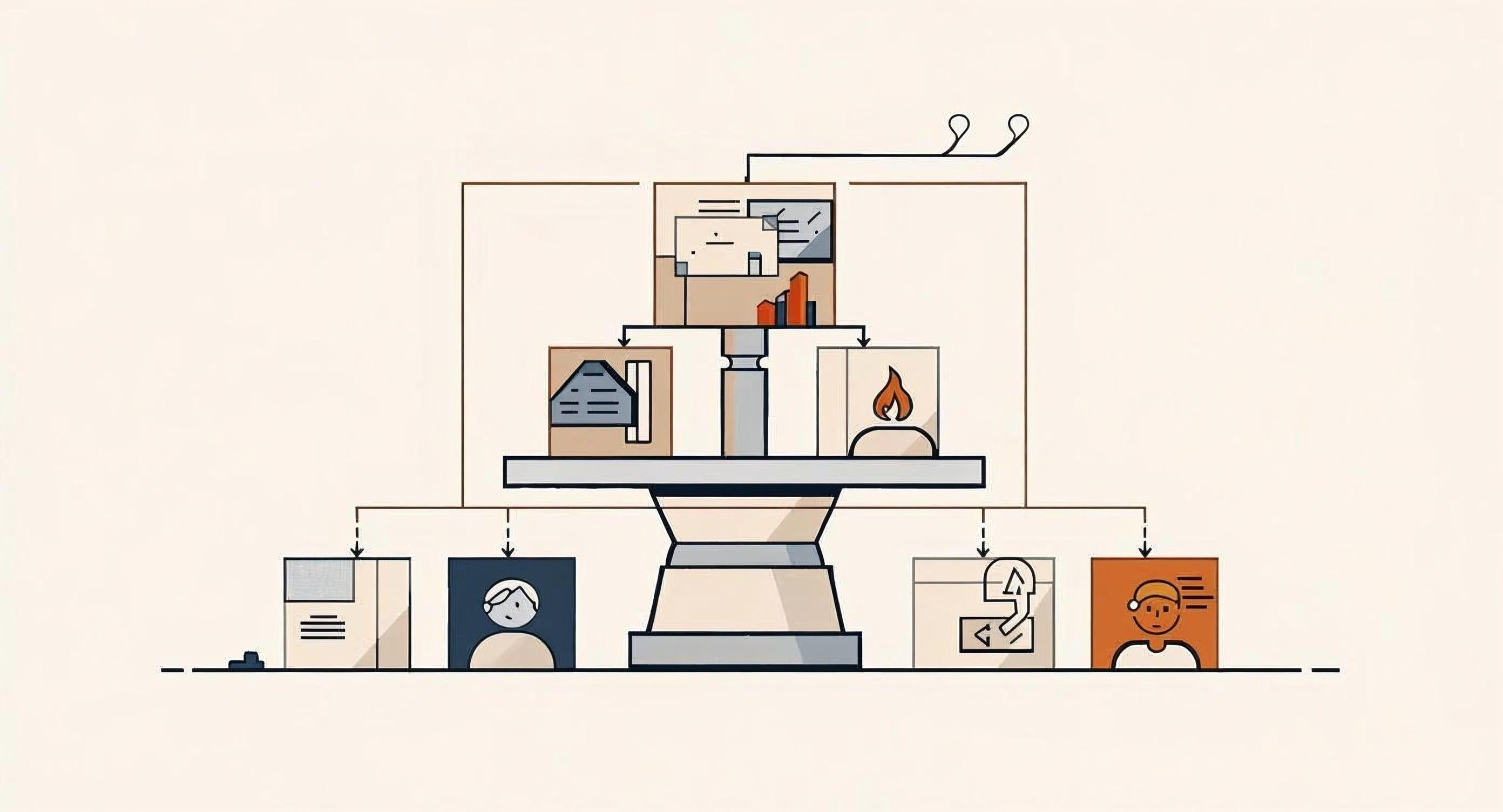
What burnout often gets confused with
Throughout my career, I’ve seen very different experiences placed under the same label.
Some people are genuinely depleted after prolonged, excessive stress. Others (and here is the HR in me speaking again) are not experiencing burnout in the clinical sense, but are using the label to explain challenges in their lives that aren’t directly about the work itself.
But there is a third group. These people are exhausted by something else entirely: Friction.
They are operating with:
unclear authority,
constant decision ambiguity,
misaligned expectations or purpose,
or systems that make good work unnecessarily hard.
In those cases, the issue isn’t a lack of willingness to work.
And friction is incredibly expensive, biologically speaking. It’s the biological cost of navigating a broken blueprint.
The High-Performer’s Tax
High performers tend to burn out first because they are the ones carrying the cognitive and emotional load when the architecture starts to fail.
Again: Biology doesn’t care about ambition. In my experience, when people disengage, it’s usually because they’re already drained... By the time performance drops and the person seems “checked out,” the system has already been failing them for months. Once a high performer becomes deeply disengaged, it is incredibly hard to bring them back.
Why most burnout interventions fail
Most burnout interventions focus on stress relief rather than structural causes. In other words, they treat symptoms, not origins.
The symptoms are familiar:
exhaustion,
cynicism,
emotional withdrawal.
But the causes usually sit somewhere else entirely:
demand–resource imbalance,
unclear authority,
ambiguous direction,
decision friction,
lack of recovery built into the system.
Addressing symptoms without addressing structure is like giving painkillers for a fracture without ever setting the bone. It will bring relief but the injury is still there.
This is why even well-intentioned, high-performance work systems can backfire. When environments are build for speed, ownership, and intensity without a deep understanding of how people actually function physiologically, they eventually overwhelm the people they most rely on.
Burnout as a systems signal
If you zoom out, burnout isn’t about individuals breaking, it’s about systems pushing people past capacity.
And capacity isn’t just about the amount of hours worked. It’s about whether people have what they need to function well over time. They include:
clarity,
authority,
psychological safety,
access to information,
and the ability to recover.
When these are missing, the cost shows up in the body, and eventually in organizational performance and operations.
Burnout, in this sense, isn’t a personal collapse.
It’s a systems signal.
So, what actually helps
I’ll be 100% honest: there’s no one-size-fits-all solution. Burnout isn’t something you can fix with just one magical initiative or program.
It almost always starts with reassessing the fundamentals: recruiting, onboarding, feedback loops, decision structures, communication channels, workflows and so on.
It also requires genuinely understanding the people in the system: their strengths, how and when they do their best work, and where friction drains energy. We’re seeing a shift from role-based teams to skill- and project-based models for a reason. But that shift only works if organizations are truly willing to know their people, and not just label them.
And it starts by asking better questions:
Is the exhaustion coming from the workload or the friction around it?
Are people accountable without real authority?
Are decisions made where the information actually lives?
Is psychological safety real, or just something we say out loud?
Leadership carries the greatest responsibility here. But influence doesn’t stop at the top.
Even without a leadership title, people shape systems every day:
by making work clearer,
by reducing unnecessary noise,
by noticing signs of fatigue,
by offering support instead of silence.
Burnout isn’t always a personal crisis.
Often, it’s a system asking for redesign.